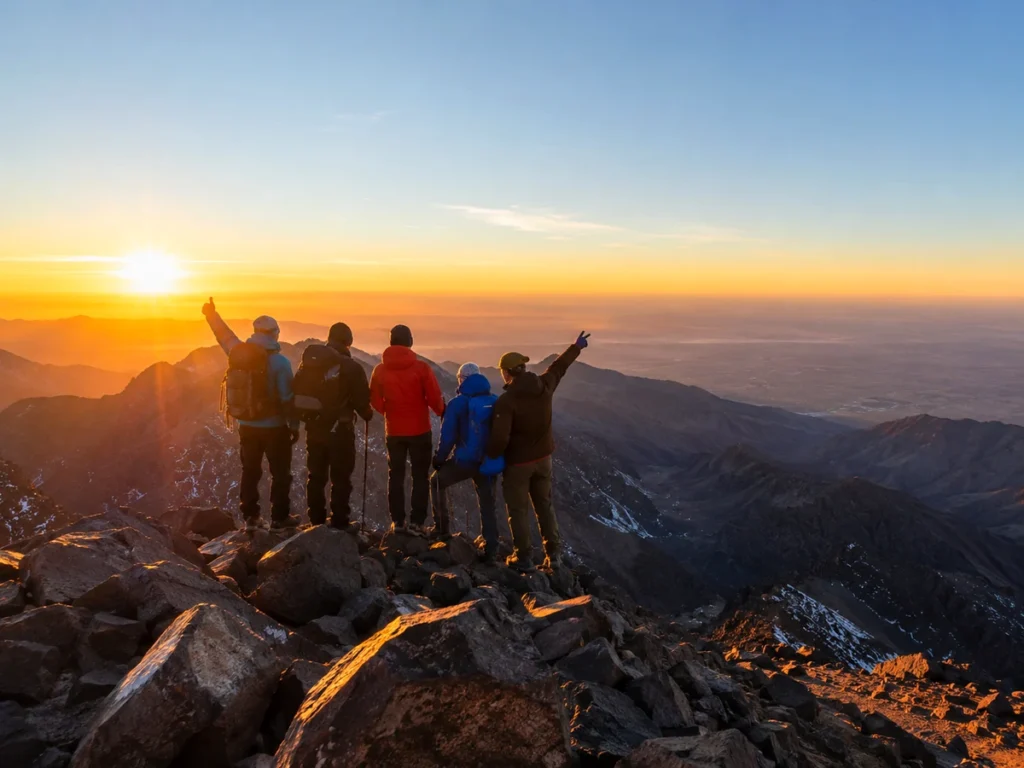
Toubkal is 4,167 m, the highest mountain in North Africa, and it can be climbed in a weekend from Marrakech. There is no rock climbing and no rope work involved. What there is, is a lot of walking, thin air, and an early start on the second morning.
Day 1: Marrakech to the refuge
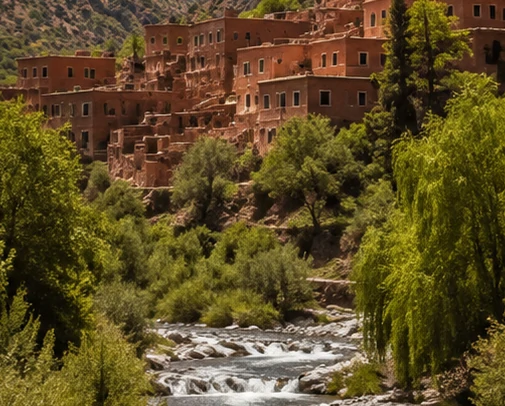
We collect you from your hotel or riad around 8 am and drive to Imlil, 65 km south, about 1 h 30 through the Ourika road and the last villages of the Mizane valley. You meet your guide there, repack, and hand your main bag to the muleteer.
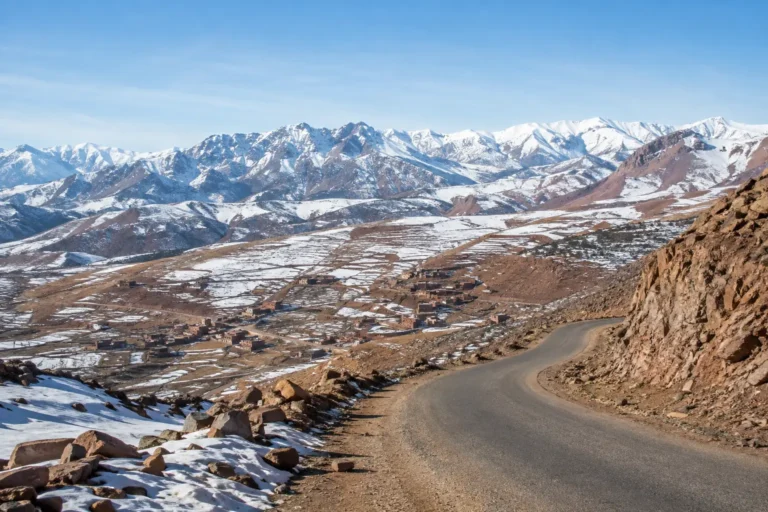
The walk starts at 1,740 m. The path climbs steadily along the river, past the shrine village of Sidi Chamharouch at 2,310 m, where the mules stop for a break and where the last shop is. From there the valley opens and the trail zigzags up the scree to the refuge at 3,207 m. Expect 4 to 5 hours of walking and about 1,450 m of ascent, at a slow, steady pace that helps you acclimatise.
Dinner is served at the refuge around 7 pm: soup, tagine, fruit. You sleep in a dormitory with blankets. It is cold at that altitude even in July, and there is no heating in the rooms.
Day 2: the summit, then back to Marrakech
Breakfast is at 5 am and you leave in the dark with head torches. The summit push is 3 to 4 hours over about 960 m of loose rock and scree, with two flatter sections that give you a rest. The last twenty minutes are the steepest.
From the top you can see the High Atlas rolling in every direction, and the plain of Marrakech far below when the air is clear. You will spend twenty minutes or so up there, then descend to the refuge for lunch, and continue down to Imlil, reaching it mid-afternoon. The car brings you back to your hotel in Marrakech in the early evening.
How hard is it, honestly
Day one is a manageable hike for anyone who walks regularly. Day two is the hard part: eight to ten hours of movement, starting at altitude, with a descent that is tough on the knees. Walking poles help more than people expect.
You do not need mountaineering experience between April and October. From December to April the summit is under snow and the trek becomes a winter climb: crampons and an ice axe are required, and the price and the group rules change accordingly.
Why a guide is not optional
Since 2018, Moroccan authorities require trekkers on Toubkal to be accompanied by an accredited mountain guide, and there is a registration check at the start of the valley. Beyond the rule, the summit slope has no obvious path in poor visibility, and altitude affects people unpredictably. Our guides are licensed, from the valley, and used to reading how a group is coping.
Altitude
Above 3,000 m, headaches, poor sleep and a short appetite are common and usually harmless. Drink more than you feel like, walk slower than feels natural, and tell your guide early if you feel unwell. If someone in the group cannot continue on summit morning, they wait at the refuge; the trek is not cancelled for everyone.
What to bring
Proper walking boots that are already broken in, warm layers including a hat and gloves, a windproof jacket, sunglasses and high-factor sun cream, a head torch, and 2 to 3 litres of water. There is nothing to buy above Sidi Chamharouch. Your main luggage stays in the car in Imlil or at your hotel in Marrakech.